
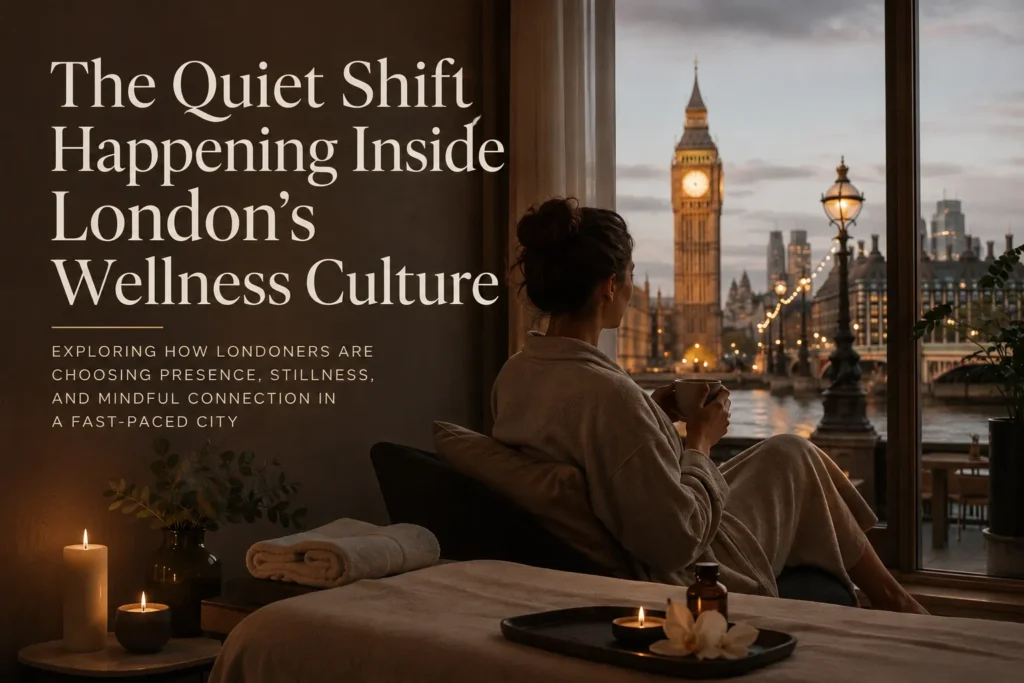
The Quiet Shift Happening Inside London’s Wellness Culture
There is a particular kind of tiredness that belongs to London.
Not dramatic exhaustion. Not collapse. Something more socially acceptable than that. The kind hidden beneath polished shoes and calendar notifications. You see it on weekday mornings in cafés around Fitzrovia, where people stare into laptops before they have fully woken up. You hear it in conversations between friends who keep saying they are “fine” while speaking with the emotional flatness of someone permanently overstimulated.
The city trains people to function brilliantly while remaining disconnected from themselves.
And eventually, the body notices.
Over the last few years, conversations around Tantric massage in London have changed quietly. The curiosity feels different now. Less performative. Less driven by fantasy alone. More people seem drawn toward experiences that offer stillness, emotional calm, or simply a temporary break from the constant cognitive noise of urban life.
That shift says something larger about London itself.
Wellness here is no longer only aesthetic. It has become psychological.
Somewhere Between Burnout and Loneliness
There is an understated loneliness woven into modern city life that rarely gets discussed honestly.
Not isolation exactly. London is too crowded for that. The loneliness is subtler — people feeling emotionally unreachable while constantly surrounded by others. Conversations become logistical. Relationships begin operating through routine rather than attention. Entire weeks disappear into work, commuting, and digital overstimulation before anyone notices how disconnected they feel from their own body.
A therapist in Marylebone once described modern professionals as “people living entirely from the neck upward.”
The phrase stayed with me.
You begin recognising it everywhere after that. Workers eating lunch while replying to emails. Couples sitting silently together while scrolling separate screens. People whose nervous systems never fully leave a heightened state of alertness.
Against that backdrop, slower wellness practices begin making emotional sense.
Not because they promise transformation. Most people are too realistic for that now. But because they create a rare environment where nothing urgent is being demanded from you for an hour or two.
No performance.
No constant responsiveness.
No pressure to appear impressive or emotionally composed.
That absence alone can feel unexpectedly restorative.
The City Moves Quickly. The Human Nervous System Does Not.
London often rewards emotional compression.
People become efficient at suppressing discomfort because the pace of the city encourages continuation over reflection. Stress becomes normalised so gradually that many individuals stop recognising what tension feels like until their bodies begin signalling it physically — shallow breathing, insomnia, emotional numbness, jaw tension, chronic fatigue disguised as productivity.
What fascinates me about the growth of mindful touch practices is that they exist almost in direct opposition to how contemporary urban environments operate.
The average London workday fragments attention constantly. Phones vibrate. Screens glow late into the evening. Conversations are interrupted midway through by notifications. Even rest becomes performative. Wellness routines are tracked, optimised, measured.
Stillness becomes strangely unfamiliar.
A well-held wellness session interrupts that rhythm in ways people do not always expect. The experience is often quieter than first-time visitors imagine. Softer around the edges. Less theatrical than popular assumptions suggest.
Sometimes the most noticeable thing is simply the absence of urgency.
And for many people, that absence feels emotional before it feels physical.
Why Certain Wellness Spaces Feel Different
Not every calming environment actually creates calm.
London is full of beautifully designed spaces that still feel emotionally tense. You notice it in overly curated wellness studios where everything appears serene but nobody fully relaxes. The atmosphere feels manufactured rather than grounded.
People can sense the difference instinctively.
The more thoughtful practitioners understand this. They recognise that genuine relaxation has very little to do with aesthetics alone. Emotional safety matters more. Tone matters more. Presence matters more.
A quiet room in Kensington with someone emotionally attentive inside it often feels more restorative than the most luxurious spa designed purely for visual effect.
This may partly explain why many people exploring mindful wellness experiences become increasingly selective over time. They begin looking beyond branding language. Beyond polished websites. Beyond exaggerated promises.
They want environments that feel psychologically calm rather than commercially persuasive.
There is a noticeable difference.
Somewhere along the way, the broader wellness conversation in London became less about indulgence and more about regulation — nervous-system regulation, emotional regulation, even relational regulation. People are not only looking for escape anymore. They are looking for somewhere they can temporarily stop bracing against life.
Touch Has Become Strangely Complicated in Modern Life
Human beings are not designed for permanent emotional distance, although modern culture occasionally behaves as though we are.
The irony is that many highly functional adults experience very little non-transactional physical connection. Touch becomes associated almost entirely with obligation, performance, or rushed intimacy. Gradually, the body adapts by expecting tension even during moments that should feel calming.
This creates an interesting emotional contradiction.
People crave closeness while simultaneously struggling to relax into it.
Mindful wellness practices rooted in slower pacing can gently interrupt that pattern. Not through spectacle. Usually through attentiveness. Breathing slows. Muscles soften incrementally. Thoughts become less scattered.
The body often recognises safety before the mind fully catches up.
There is something quietly revealing about how emotional exhaustion manifests physically. Shoulders held too tightly for too long. Breathing that never reaches the lower lungs. The subtle restlessness of people who have forgotten how to be still without feeling guilty about it.
London contains thousands of people living in that state every day.
You can see it in the Underground after 6pm.
The Wellness Industry Is Becoming More Emotionally Intelligent
A decade ago, much of the luxury wellness world revolved around external transformation. Better skin. Better fitness. Better optimisation.
Now the emotional language has changed.
People speak more openly about overstimulation, nervous-system fatigue, emotional burnout, and the strange psychological effects of constant digital engagement. Even high-performing professionals are beginning to recognise that endless productivity eventually creates internal distance.
The body stops feeling inhabited.
This cultural shift has influenced how tantra-related wellness experiences are perceived as well. The conversation feels more nuanced than it once did. Less sensationalised. More connected to mindfulness, emotional awareness, and bodily presence.
Of course, misconceptions still exist. Anything involving intimacy tends to attract projection. But many people approaching these experiences now do so from a place of emotional curiosity rather than fantasy alone.
They want to feel grounded again.
And often they are surprised by how subtle the experience actually feels.
Not dramatic.
Not performative.
Just unusually present.
A Quiet Evening in Chelsea Explains More Than Most Wellness Articles
One evening last winter, I walked through Chelsea after a long work event. Restaurants were crowded. Conversations spilled onto pavements despite the cold. Everyone appeared socially engaged.
Yet the atmosphere underneath felt oddly tired.
You notice this sometimes in London after dark — people continuing the performance of sociability long after their nervous systems have clearly checked out. Entire evenings become extensions of work energy. More stimulation layered onto existing stimulation.
Perhaps that is why quieter wellness environments increasingly appeal to people who would once have dismissed them entirely.
There is relief in entering a space where nothing is accelerating.
No loud music.
No pressure to entertain.
No expectation to impress anyone.
Just slower attention.
That slowness can feel deeply unfamiliar to people accustomed to functioning in permanent anticipation mode.
And unfamiliarity, interestingly enough, is often where emotional awareness begins.
The Difference Between Escapism and Presence
Many superficial wellness articles misunderstand this distinction completely.
Escapism disconnects people further from themselves. Presence reconnects them.
They are not the same thing.
Some experiences numb the nervous system temporarily. Others soften it enough that people begin noticing themselves again — their breathing, emotional fatigue, relational tension, or simply how long they have been carrying internal pressure without pause.
The healthier interpretations of tantra tend to revolve around awareness rather than intensity.
Awareness of pace.
Awareness of physical sensation.
Awareness of emotional state.
That is partly why conversations around these practices continue evolving in London wellness circles. The interest increasingly overlaps with mindfulness culture, somatic awareness, and therapeutic approaches to stress rather than purely aesthetic wellness trends.
People are becoming less interested in appearing relaxed and more interested in actually feeling calmer.
There is a meaningful difference between those two things.
London’s Relationship With Rest Is Still Complicated
Rest in London often carries guilt attached to it.
People apologise for slowing down. They describe exhaustion competitively. Even leisure becomes productive somehow — networking disguised as dinner, exercise tracked obsessively, weekends curated for social proof rather than enjoyment.
Stillness can feel psychologically uncomfortable at first because the city conditions people to associate constant movement with value.
This is why some individuals feel unexpectedly emotional during slower wellness experiences. Once external stimulation quiets down, internal tension becomes easier to notice.
Not everyone welcomes that immediately.
Sometimes the hardest part of slowing down is recognising how overwhelmed you have actually been.
A surprising number of people move through daily life with nervous systems stuck somewhere between vigilance and fatigue. Functional on the surface. Quietly depleted underneath.
The body keeps score of that imbalance long before the conscious mind fully acknowledges it.
The Most Memorable Experiences Tend to Be the Least Performative
When people describe genuinely meaningful wellness experiences, they rarely talk about extravagance first.
They remember smaller things.
The quietness of the room.
The absence of rushing.
How grounded someone felt.
The unusual relief of not needing to perform confidence or emotional composure for a while.
Those details linger because emotional regulation is sensory before it becomes intellectual.
You cannot think your way into calmness indefinitely. At some point the nervous system requires a different pace entirely.
That may explain why thoughtful wellness environments continue resonating in a city defined by acceleration. They create temporary contrast against everyday London life. A pause from constant responsiveness.
Not an escape from reality exactly.
More like a softer relationship with it for an hour or two.
What People Are Actually Looking For
The longer you observe London wellness culture, the clearer one thing becomes:
Most people are not searching for perfection.
They are searching for relief from emotional noise.
Sometimes that search leads them toward therapy. Sometimes meditation. Sometimes long walks without headphones through quieter parts of the city. Sometimes toward slower forms of body-based wellbeing that encourage stillness rather than stimulation.
The motivations are often more human than wellness marketing suggests.
People miss feeling present.
They miss feeling emotionally unguarded.
They miss inhabiting their own bodies without tension.
Within that broader cultural shift, interest in more reflective wellness practices continues growing quietly. Not loudly. Not dramatically. Mostly through private conversations and personal recommendations between people exhausted by environments that demand endless performance.
Some eventually begin exploring spaces connected to mindful wellness sessions in London not because they expect fantasy, but because they are tired of feeling psychologically overstimulated all the time.
That distinction matters more than most articles acknowledge.
The Future of Wellness May Be Less About Optimization
For years, wellness culture revolved around improvement.
Better routines. Better sleep metrics. Better productivity. Better self-control.
But lately there seems to be a quieter counter-movement emerging beneath all that optimization. People are beginning to crave experiences that feel less engineered and more human.
Less performance.
Less branding.
Less pressure to transform constantly.
Just spaces where the nervous system can loosen slightly.
London, despite its intensity, may actually be pushing people toward that realisation faster than other cities. Emotional exhaustion becomes difficult to ignore when daily life rarely slows down on its own.
And perhaps that is why slower wellness practices continue finding relevance here. Not because they offer some dramatic solution to modern life, but because they momentarily interrupt its relentless pace.
Sometimes that interruption is enough.
Enough to breathe differently.
Enough to feel physically present again.
Enough to remember what calmness feels like before the city starts moving around you once more.